What is Personalized AI Learning? A Complete Guide
Personalized AI learning is an educational approach where artificial intelligence generates and adapts learning content — lessons, practice questions, explanations, and pacing — in real time based on each learner's individual goals, existing knowledge, and available time. Unlike fixed courses or textbooks, AI-personalized learning paths are unique to each student and update continuously as they progress.
How Personalized AI Learning Works
Traditional education delivers the same content to every student in the same sequence. A teacher covers Chapter 3 on Tuesday regardless of whether half the class still needs more practice with Chapter 2. Personalized AI learning breaks this constraint.
The process works in four stages. Assessment: the AI evaluates what the student already knows, either through an explicit quiz or by inferring from early interactions. Path generation: based on the assessment, the AI builds a custom sequence of topics, explanations, and practice problems. Adaptive delivery: the AI tracks which concepts the student grasps quickly and which take longer, adjusts pacing, re-explains topics in different ways when needed, and introduces new material when the student is ready. Feedback loop: every interaction — a correct answer, a skipped question, time spent on a section — feeds back into the AI's model of that student, making the path increasingly precise over time.
Why Personalized AI Learning Matters for Students
Students everywhere face the same challenge: a single teacher managing thirty or forty students in a classroom cannot give each one the individualized attention they need. Students preparing for competitive entrance exams often rely on the same notes, the same coaching materials, and the same schedule — regardless of their individual weak points.
AI-personalized learning changes this. A student who already understands electromagnetic induction does not need to review it for forty minutes while the rest of the class catches up. Instead, they move to circuits. A student who struggles with integration gets more practice problems and a different explanation before advancing.
Research consistently shows that personalized instruction produces stronger outcomes. Students who receive targeted practice on their specific gaps progress faster than students following a fixed curriculum path. The same principle applies whether the personalization comes from a human tutor or an AI system.
What Makes an AI Learning Platform Effective
Not all AI learning tools offer the same depth of personalization. When evaluating an AI learning platform, look for curriculum alignment — does the platform know your syllabus? Generic AI assistants like ChatGPT can answer questions, but they do not know your specific exam syllabus or your curriculum's structure.
Also consider explanation quality (can the AI explain the same concept in multiple ways?), practice and assessment (does the platform generate practice questions, not just explanations?), progress tracking, and accessibility on a mobile phone with a limited data connection.
How Nano Syllabus Applies Personalized AI Learning
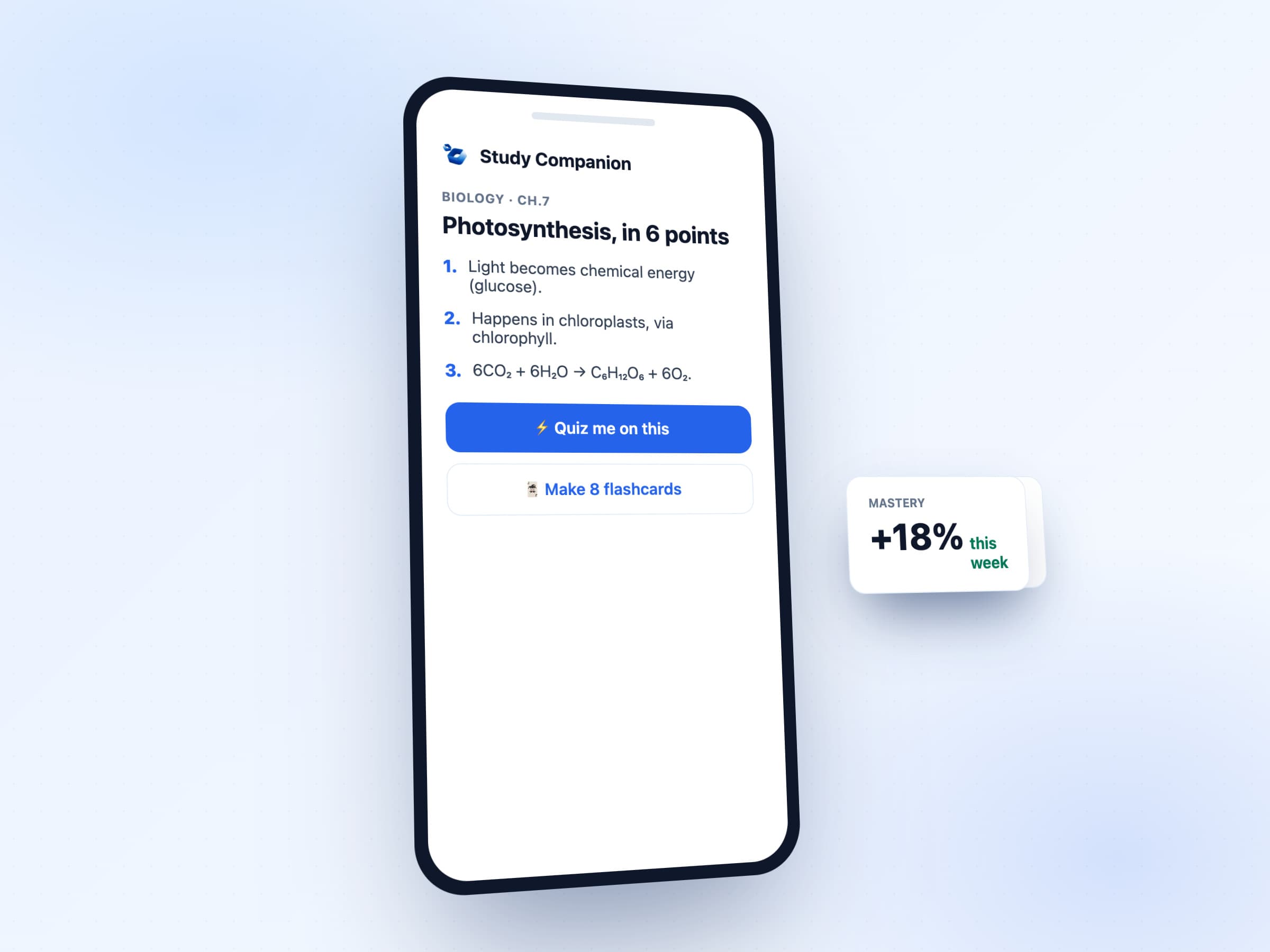
Nano Syllabus is an AI co-pilot that learns each student's exact curriculum — the syllabus, entrance exam question banks, and teacher notes — so the explanations and practice it generates are directly relevant to what students are actually studying.
When a student opens Nano Syllabus, they do not get a generic AI chatbot. They get a system that understands what their textbook chapter covers, knows which question types appear most on their exam, and can explain a concept the way a good teacher would — with familiar examples and clear academic context.
Students can ask doubt questions and get explanations tied to their exact syllabus, generate practice questions on specific chapters, review past-paper style problems with step-by-step solutions, and get revision summaries before exams.
Frequently Asked Questions
What is the difference between adaptive learning and personalized AI learning?
Adaptive learning adjusts the pace and difficulty of a fixed content library based on student performance. Personalized AI learning goes further — it can generate new explanations, create novel practice questions, and restructure the entire learning path, not just adjust the speed through a preset sequence.
Can AI replace human teachers?
No. AI learning tools are most effective as supplements, not replacements. A teacher provides classroom management, motivation, mentorship, and the kind of human connection that drives long-term engagement. AI personalizes the practice and explanation layer that teachers cannot feasibly customize for every student individually.
Is personalized AI learning effective for exam preparation?
Yes, particularly for high-stakes exams with a defined syllabus. When an AI knows the exam pattern, question types, and topic weightings, it can target practice precisely — focusing more time on high-yield topics and weak areas rather than distributing time evenly across all chapters.
How does Nano Syllabus personalize learning?
Nano Syllabus is built around each student's official curriculum and exam materials. When a student asks a question or requests practice, the AI generates content aligned to their syllabus and exam patterns — not generic content. This makes it directly useful for coursework and entrance exam preparation alike.
Is personalized AI learning suitable for all subjects?
It is most mature for subjects with clear right-or-wrong answers: mathematics, physics, chemistry, biology. It is increasingly effective for concept-heavy subjects like economics and computer science. It is less suited to purely creative or argumentative subjects where quality is highly subjective.
How long does it take to see results with an AI learning platform?
Students typically notice improvement in their ability to answer practice questions within two to three weeks of consistent daily use (30–45 minutes per day). Exam score improvements depend on how far in advance a student begins and how consistently they use the platform.
Is Nano Syllabus free?
Nano Syllabus offers a free tier that students can start with immediately. Visit nanosyllabus.com to get started.
What subjects does Nano Syllabus cover?
Nano Syllabus covers core school and pre-university subjects — Physics, Chemistry, Mathematics, Biology, and Computer Science — as well as entrance exam preparation materials, all aligned to your own syllabus.